


General Education
A flexible core curriculum that builds essential skills and prepares students for real-world success.
The General Education program is designed to support and advance the academic vision and institutional mission of Marian University by offering an integrative curriculum that draws on the foundational value of the liberal arts while equipping students with the practical skills necessary for success in a rapidly evolving world. Structured within a 30‑credit framework, the program provides learning experiences that flexibly allow multiple courses and encourages non‑course‑based opportunities to fulfill established learning outcomes which integrate the Marian University Core Values of Community, Learning, Service, Social Justice, and Spiritual Traditions.
Grounded in essential and foundational skills, the program emphasizes the development of each student’s strengths and interests, ensuring that learning is both personally meaningful and academically rigorous. It distinguishes clearly between what is essential for all learners and what may be tailored to individual pathways, while also supporting the diverse needs of post‑traditional students through adaptable formats and varied modes of engagement.
The program’s signature work requires students to integrate their learning across experiences, demonstrating mastery of outcomes through authentic, applied, and reflective work. In doing so, the General Education program fosters intellectual agility, purposeful learning, and the capacity to connect knowledge with real‑world challenges.
General Education Outcomes


Critical Thinking
Students will recognize critical thinking as a process of identifying, analyzing, synthesizing, evaluating, and constructing reasoning in deciding what conclusions to draw or actions to take.

Ethical Reasoning
Students will assess their own ethical values and the social context of problems, recognize ethical issues in a variety of settings, think about how different ethical perspectives might be applied to ethical dilemmas, and consider the ramifications of alternative actions.

Global Learning
Students will develop awareness of cultural practices and traditions in the context of a changing, globalizing world while reflecting on their own values and customs. Students will exchange ideas and connect with diverse communities and cultures.
Information Literacy
Students will navigate information overload and filter bubbles and can look at scientific research through analytical and critical lenses thereby recognizing that an information literate society is more just, fair, and open. Students will apply information literacy practices to critique ideas and to examine policies and worldviews
Intercultural Knowledge
Students will articulate awareness of their own cultural identity and the impacts of inequality on individuals, groups, and social structures.

Inquiry and Analysis
Students will collect, analyze and interpret physical evidence to determine whether that evidence can help answer questions about the natural or physical world.
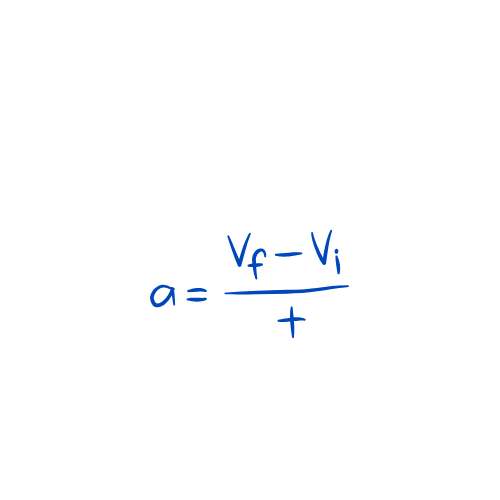
Quantitative Reasoning
Students will develop or compute representations of data using mathematical forms or equations as models, use statistical methods to assess their validity, make and evaluate important assumptions in the estimation, modeling, and analysis of data, and recognize the limitations of the results.

Written Communication
Students will create, identify, and engage in significant research questions, engage rhetorically, and integrate a variety of appropriate sources to support a central claim.

