



Working Families Grant Program
Empowering Single Parents, Transforming Lives
At Marian University, we believe education can spark profound change—not just for individuals, but for entire families. That’s why the Working Families Grant (WFG) Program is here: to support single parents who dream of earning their bachelor’s degree while balancing the responsibilities of raising children.
For nearly 20 years, this program has been making waves, helping single parents break down barriers, achieve their goals, and build brighter futures for themselves and their children.



Additional Information
Who’s Eligible?
If you’re a single parent with primary or physical placement of your children and meet these criteria, we encourage you to apply:
- You’re accepted and enrolled full-time at Marian University in the traditional day program
- You have a minimum GPA of 2.5
- Your youngest child’s years in school match or exceed the time you need to complete your degree
Your Path to Success
As a WFG participant, you’ll be supported every step of the way. In return, you’ll commit to:
- Completing 12–15 credits per semester and staying on track to graduate in four years
- Performing 20 hours of community service each semester
- Maintaining a 2.5 GPA or higher
- Regular check-ins with your academic advisor, career counselor, and the WFG Director
This partnership ensures you stay focused, motivated, and ready to tackle challenges.
How to Apply
Applications are accepted year-round and reviewed on a competitive basis. To get started, download the application here or contact us for more information.
Kerry Strupp
Director of the Working Families Grant Program
920.923.8953
kstrupp@marianuniversity.edu
Read Stories of Impact
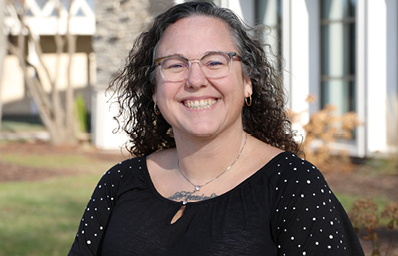

“The working families grant program and Marian university has allowed me to be a mother to my children. I am able to spend time reading with them and help my 10-year-old with her homework. I can now attend school functions and be present at their concerts and family nights. I am able to be a mother, and that is a blessing within itself from God. I am forever grateful for the journey that has led me to the Working Families Grant Program. Without The Working Families Grant Program, I wouldn’t be able to be the mother that my children need.”
Dana Pollom, Social Work Student

“I try to let other single parents that are interesting in going back to school know about the Working Families Grant and the sense of purpose and community that comes with the entire educational experience at Marian. I learned so much in my classes, from my professors, and from professionals in the field that I am able to use in my profession now.”
Aundrea Pearson '23, Bachelor of Social Work
FAQs
What’s expected of participants in the Working Families Grant program?
There are five basic categories of participant expectations: Academic, Community Service, Monthly Reporting, Student Development, Appropriate Conduct
What are the academic requirements?
You must be committed to maintain full-time status, which is a minimum of 12 credits. However, WFG expects participants to average 14-16 credits per semester and requires that a minimum of 30 credits be completed annually. WFG requires participants to establish a four-year graduation plan and follow it closely.
What if I drop a class I’m doing poorly in? Am I disqualified from WFG?
You will be expected to keep the Program Director informed each month of your academic standing, especially if you are struggling in a class. WFG will refer participants to support services on campus to assist them in getting help (e.g., math and writing lab, tutoring, study skills development, etc.) in an effort to improve the grade if possible. Dropping a class is considered a last resort in the WFG program and must be approved by the WFG Director.
Am I allowed to take classes in the summer?
Keeping in mind that WFG requires completion of 30 credits per year, WFG may cover the cost of up to 3 credits during Winterim session (a three-week session starting the first full week in January) and/or the cost of up to 6 credits during the summer session. With your advisor’s assistance, we have found that by making slight scheduling changes in your four-year plan and adding a Winterim class, participants are able to stay on track and in compliance with WFG requirements.
What is the minimum GPA required?
You must maintain the minimum GPA requirement for your major/minor. For example, if you are a nursing or education student, you must maintain the required cumulative GPA for that degree. It depends on your major/minor; however, a 2.5 GPA or higher is required to remain in the Working Families Grant program.
If I start out in nursing but later decide it’s not for me, can I change majors?
A change in major almost always results in an extension of your graduation date, which would present a certain problem for WFG. During your first semester you will be expected to complete an online career assessment (SII) and meet with the Career Services Director to interpret the assessment results. You must have clear and specific career goals to graduate in four years. WFG expects participants to make informed decisions about their career goals and remain committed to them.
What is the community service expectation?
Marian University is sponsored by the Congregation of Sisters of St. Agnes (CSA) who have laid a foundation of principles and core values at the University which are: Community, Learning, Service, Social Justice, and Spiritual Traditions. Community service is highly valued by the sponsoring donors of WFG. Participants are expected to perform 20 hours of service each semester, which must be approved by the Program Director.
Can I get credit for volunteer hours completed prior to participation?
Community service hours cannot be retroactive prior to acceptance into the WFG program. Additionally, ideas and actual involvement in community service events must be approved in advance by the Program Director to ensure appropriateness. Current participants have been involved in a large variety of volunteer and service experiences.
How do I document community service?
Marian University has an on-line community service tracking program. Service hours are submitted electronically, and the Program Director moderates the submissions, making sure compliance is documented for each participant every semester that shows the dates, locations, and hours of community service performed.
What is the monthly report requirement?
WFG participants are required to meet with the Program Director at least four times each semester to discuss academic standing, community service, and identify and address any needs or concerns as a parent and student. We recognize that many factors play into the success and failure of a single parent student trying to complete their first bachelor’s degree. We value support services on campus and in the community, which is why mentoring is an important aspect of WFG. Our administrative team is made up of key Marian staff, a liaison in each of these areas: admissions, financial aid, academic advising, and personal counseling.
Sometimes I feel overwhelmed juggling my responsibilities as a parent, at work, and at school. Is it true that you offer professional counseling services?
Marian University does offer personal counseling services, and WFG participants are required to meet with the University Counselor twice per semester. These sessions provide a safe, confidential space to talk through the challenges of balancing parenting, work, and school. The Counselor supports participants and their children by addressing emotional, physical, and spiritual well-being, helping them develop healthy coping strategies and feel more grounded and supported throughout their journey.
What are the expectations regarding student development?
WFG participants complete both the Strong Interest Inventory and the Myers-Briggs Type Indicator assessments, followed by a workshop with the Career Services Director to review their results. This helps students gain clearer insight into their strengths, interests, and ideal career paths. In addition, participants are required to attend other personal or career development activities each semester. This developmental programming is invaluable and equips students with new skills, broadens their perspectives, and supports them in navigating a wide range of academic, professional, and personal challenges.
Can WFG help me with legal issues and costs?
WFG will not pay for legal fees, but has invited legal speakers to come on campus and share their expertise with single parents who have specific challenges and questions. WFG hopes to continue to sponsor such events each year.
Can WFG help me with finances and personal budgeting?
There has been a growing interest with WFG participants to get help with budgeting skills. WFG has offered a variety of budgeting workshops in the past and has invited guest speakers to address finances and budgeting. We require each participant to establish a budgeting plan using services provided by Consumer Credit Counseling Service.
Does WFG cover the entire tuition amount?
WFG will pay a partial tuition stipend. To discourage undue preference, WFG participants are required to apply and be eligible for Federal and State grants and loans (FAFSA). The Independent Student Financial Aid formula is used to calculate the WFG tuition award.
Can I apply for other scholarships if I am accepted into the WFG program?
Yes and no. Being a participant in WFG does not exclude you from being able to apply for other grants or scholarships, such as the Talent Incentive Program (TIP) or Merit Scholarship. We encourage WFG participants to apply for outside scholarships, and there are many sponsored by diverse organizations in our community. However, Marian University is committed to providing educational opportunities to as many students as possible, so WFG participants are not allowed to also receive any of the following specific Marian University scholarships or awards:
- Academic Achievement Award (AAA)
- Presidential Scholarship
- Trustee Scholarship
- Naber Scholarship
- Sister Mary Sheila Burns Award
Can WFG help me in a financial crisis? Like with my car?
Although WFG is somewhat restricted to specific kinds of assistance (tuition, rent, childcare, and food), participants may be eligible for additional assistance. Participants are referred to other community programs and resources. In a financial crisis, discretionary funds may be used as determined by the program director.
Is it true that WFG has a stipend award that covers rent, childcare, and food?
Yes. WFG does pay participant expenses for rent, childcare, and food gift cards. These payments are made directly to the provider. Rent and food are covered 12 months a year, while childcare is paid during scheduled class time, as well as when students are completing internships and clinicals.
If I am currently getting HUD assistance, do I have to move or terminate it?
You can continue to live where you are and continue to receive assistance through HUD. WFG participants are required to provide a copy of their financial aid award letter to HUD to update their records and to determine if there is a change in the rent amount. For those receiving housing assistance, WFG will pay for their portion up to $555.
What is the maximum rent amount covered by WFG each month?
The maximum amount of rent covered by WFG is $555 per month. Participants must be able to pay the remaining balance without working more than 25 hours per week to make up the difference.
What if I receive notice of a rent increase, will WFG help with that?
WFG has a rental form that must be completed by your landlord. It states that we respectfully request the rent remain constant during the participant’s educational period. The participant will be responsible for amounts that exceed $555. We encourage participants to find a safe environment that is economical, and remain in that location for the duration of their education if possible.
Will WFG pay for a shared rental situation if I want to have a roommate?
WFG will confirm with the landlord that the WFG participant is the only adult name on the rental contract. Should you decide to share your home or apartment with another adult, WFG will not pay for rent. WFG must be notified if you currently or plan to have another adult share your rental situation. This type of change will not adversely affect participation in the program, unless WFG is not informed of this circumstance in advance. If WFG were to become aware that a change had occurred without notification, participation in the program would most certainly be jeopardized.
What is the maximum childcare amount covered by WFG?
$650 per month. WFG will cover childcare expenses for before and after school, transportation, and daycare services. The childcare provider must be a licensed provider. Childcare is covered by WFG only while the participant is enrolled in the University, during class time, or educational-related activities.
What is the food gift card?
Each month, food gift cards are purchased from local grocers such as Piggly Wiggly, Festival Foods, Wal-Mart, and Pick n Save. The amount of the card is based on the number of dependent children in the household (1/$200, 2/$250, 3/$300, 4 or more/$350). The food card is distributed when the participant meets with the Program Director to review the monthly report and WFG requirements have been met. WFG is not responsible for replacement of lost or stolen food cards.
What is the role of the administrative team?
The primary objective of the administrative team is to mentor participants and maximize program resources and support services to assist participants in obtaining their first bachelor’s degree. Our goal is to develop a partnership philosophy, to swiftly identify barriers to success, and to overcome them so that single parents can pursue their academic goals.


